People


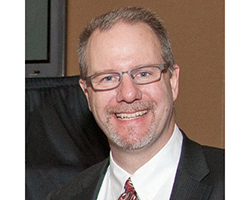
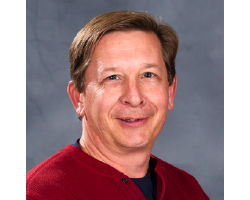
Daniel Anderson

Daniel Anderson

Senior Project Manager, Pacific Northwest National Laboratory

Daniel Anderson is a senior management and technology development professional with more than 30 years of experience. His professional career at PNNL spans roles as a scientist/engineer, line manager and program/project manager covering a wide variety of technology areas working with both government and industrial clients.

Anderson also has several years of professional experience in the industrial sector working as an entrepreneur on two start-up companies leading product development and operations management efforts.

▼ more

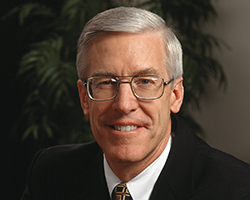
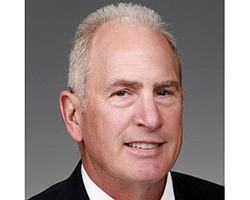
Steve Buelow

Steve Buelow

Director, New Mexico Consortium

Dr. Buelow is responsible for the leadership, management, and strategic direction the New Mexico Consortium.

Before joining the New Mexico Consortium in 2012 as the director of Laboratory Research, Dr. Buelow held research and management positions at Los Alamos National Laboratory LANL. As Leader of the Energy Security Center, he worked with LANL line and program organizations to coordinate the development of LANL’s Energy Security Mission.

Dr. Buelow has degrees in chemistry and mathematics from the University of Wisconsin-La Crosse and in physics and chemical physics from Harvard University. While at LANL, he initiated and led research projects in a wide range of technical areas including hydrothermal chemistry, high-resolution spectroscopy, and the measurement of ultra-fast dynamical processes. At LANL, Dr. Buelow worked with more than seventy students and nearly two dozen postdoctoral students and was recognized for excellence as a mentor.

▼ more

Jim Coons

Jim Coons

Los Alamos National Laboratory

Bio

More bio info

▼ more

Taraka Dale

Taraka Dale

Los Alamos National Laboratory

Bio

More bio info

▼ more


Santanu Dasgupta

Santanu Dasgupta

Reliance Industries

Bio

More bio info

▼ more

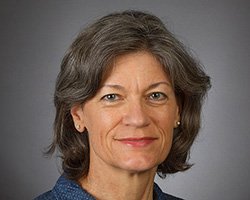
Fiona Davies

Fiona K. Davies

Research Assistant Professor, Colorado School of Mines

Dr. Davies holds a PhD in biochemistry from the University of Otago, New Zealand, and has completed postdoctoral training at the University of California, Berkeley, and Colorado School of Mines.

Her research interests lie in the use of photosynthetic microbes as a platform for chemical synthesis. She has successfully engineered cyanobacteria for the production of a class of chemicals known as terpenoids, which have received considerable attention for use as drop-in biofuels and for applications in the bioplastics and flavor/fragrance industries. Central to her research objective is gaining an understanding of how carbon partitioning among major metabolic sinks is regulated, and how perturbations in carbon flux and partitioning impact photosynthesis. Her role in PACE is to increase photosynthetic sink strength in Chlorella sp. by engineering increased metabolic flux toward starch biosynthesis.

▼ more

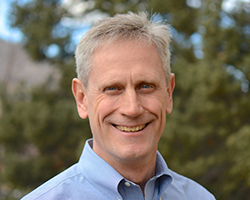
Thomas Dempster

Thomas Dempster

Arizona State University

Dr. Thomas Dempster is a research professor at Arizona State University's Center for Algae Technology and Innovation (AzCATI) in Mesa, Arizona.

He is the testbed site coordinator for the Department of Energy-funded Algae Testbed Public-Private Partnership (ATP3) overseeing five national algae testbed sites. Dr. Dempster serves as co-director of the ATP3 Education and Training efforts that deliver various algae workshops and forums nationally and abroad, AzCATI laboratory manager, safety and compliance manager and recharge center manager.

Dr. Dempster is an experienced phycologist (algae scientist) who began his research career at ASU in 1989 working on the Aquatic Species Program, a pioneering Department of Energy research program investigating the potential of algal oil as an alternative to conventional crude oil.

Dr. Dempster currently focuses on algae strain selection and development, algae biomass production, algal biofuels and high-value coproducts, and power plant carbon capture using microalgae. He completed his BS in biology, MS in botany and PhD in plant biology from ASU while studying a variety of algae-related topics.

▼ more

Eric Dunlop

Principal, Pan Pacific Technologies

Eric Dunlop holds a PhD, and is a chemical Engineer, chartered Engineer, and Fellow of the Institute of Chemical Engineers. He has 35 years’ experience in large-scale biochemical engineering projects, and more than 25 years in the algae business.

Dr. Dunlop has had an extensive academic career, and is the recipient of numerous awards, including the Nightingale Prize in Biomedical Engineering. He is currently the principal of Pan Pacific Technologies of Adelaide, Australia, which specializes in bioprocess simulation, particularly algae.

Dr. Dunlop was a member of TEA/LCA team for the National Alliance for Advanced Biofuels and Bioproducts (NAABB). In addition to his role as TEA/LCA Director for the Targeted Algal Biofuels and Bioproducts (TABB) – PACE project, in which he is also part of the management team, he is currently co-team leader for the Process Integration in the Advancements in Algal Biomass Yield (ABY)-REAP project. Dr. Dunlop is an Associate Editor for Algal Research.

Dr. Dunlop’s primary role in PACE is to direct the TEA/LCA efforts with a focus on integration, harmonization, commercialization, and sustainability. An end-to-end system model using industry-standard programs, such as Aspen Plus, will be developed to test production scenarios and help refine experimental approaches. Using Pan Pacific’s Aspen algal biofuels pathway and engineering model studies to ensure immediate integration, novel PACE unit operations will be harmonized with more well established system components before the full LCA/TEA is executed. Pan Pacific will work closely with RIL to obtain credible LCA/TEA data at the required scale to help push the full-scale development. Dr. Dunlop also serves as part of the management team, whose responsibility it is to ensure the successful integration and management of PACE’s scientific goals.

▼ more


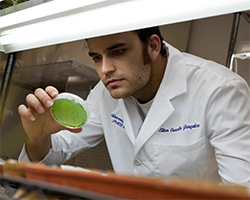
Elton Gonçalves

Associate Research Scientist, New Mexico Consortium

Elton Gonçalves joined Dr. Sayre’s group at NMC in January of 2016 to work on the PACE project. His goal is to employ multiple strategies (e.g., molecular and nutrient optimization) for algal crop protection against bacteria, fungus, virus, metazoans, etc.

Such efforts are fundamental to secure consistent biomass productivity and bring algal biofuels to an economically feasible scenario. Elton is also exploring novel biocontainment methods for genetically modified algae.

Elton received his Ph.D. in Plant Molecular and Cellular Biology at the University of Florida in 2015. Under the mentorship of Dr. Bala Rathinasabapathi, Elton investigated the metabolic regulation of triacylglycerol (TAG) accumulation in green algae, especially in regards to the effects of Nitrogen starvation (-N). His studies revealed that certain Chlorella strains respond extremely fast to –N, which induces TAG accumulation by both the recycling of acyl groups from membrane lipids and de novo routes. Moreover, his proteomics study in short-term N-starved Chlorella revealed several novel proteins highly modulated by -N, including an myb-like transcription factor (ROC40) that was previously implicated in circadian rhythm control in Chlamydomonas. He demonstrated that the roc40 mutant in Chlamydomonas is partially impaired in TAG accumulation upon –N condition.

▼ more

Ninad Gujarathi

Ninad Gujarathi

Reliance Industries

Bio

More bio info

▼ more

Norman Lewis

Norman Lewis

Regents Professor, Washington State University

Norman G. Lewis currently holds positions of Regents Professor and Eisig-Tode Distinguished Professor, Institute of Biological Chemistry, at Washington State University, as well as affiliate scientist at the New Mexico Consortium and the National Center for Genome Resources. He serves as scientific director for PACE. He is also regional editor of Phytochemistry and has been on the editorial board since the early 1990s.

Dr. Lewis' current research interests are largely in discovering/studying/modifying plant biochemical pathways, as well as with bioenergy/bioproducts and medicinal plant biosynthetic pathway research (e.g., using transcriptomics, metabolomics and tissue metabolite imaging). His laboratory discovered the "dirigent" proteins, the first example of control over radical-radical phenolic coupling in planta, and which lead to anticancer compounds such as podophyllotoxin and etoposide. He has published in excess of 220 scientific papers and patents, and nearly 50 personnel from his laborator now hold academic positions in the U.S., Canada, Brazil, China, France, Japan, Korea, New Zealand, Thailand and the United Kingdom.

His research program has largely been supported by the U.S. Department of Energy, NASA, the National Institutes of Health, the National Science Foundation, the U.S. Department of Agriculture, as well as the Thomas G. and Anita Hargrove Foundation and the Arthur M. and Katie Eisig-Tode Foundation.

▼ more

Anthony J. Marchese

Professor of Mechanical Engineering, Colorado State University

Anthony Marchese is the associate dean for Academic and Student Affairs, director, of the Engines and Energy Conversion Laboratory, and professor of mechanical engineering in the College of Engineering at Colorado State University.

Marchese holds a PhD and MA in Mechanical and Aerospace Engineering from Princeton University and BS and MS degrees from Rensselaer Polytechnic Institute.

Current research projects include pollutant formation from algae-based biofuels, locomotive engine emissions, ultrasonic harvesting of microalgae, dual fuel diesel/natural gas engines, biomass gasifier cookstoves and methane emissions from the natural gas supply chain. He is on the editorial board of the journal Algal Research and is the principal inve stigator on a $1.9 million study organized by the Environmental Defense Fund aimed at quantifying the total emissions of methane from the gathering and processing sectors of the natural gas supply chain. From 2010 to 2013, he served as the fuel conversion team leader for the National Alliance for Advanced Biofuels and Bioproducts. He has previously held positions at Rowan University, United Technologies Research Center in East Hartford, Connecticut, and NASA Glenn Research Center in Cleveland, Ohio. His role in PACE is to evaluate fuel properties and engine performance.

▼ more


John McGowen

John McGowen

Arizona State University

Bio

More bio info

▼ more

Dan Nordquist

Dan Nordquist

Washington State University

Bio

More bio info

▼ more

James Oyler

James R. Oyler

President, Genifuel Corporation

James R. Oyler formed Genifuel Corporation in 2006. He has more than 30 years of experience in technology management and has served as president and CEO, senior executive and board member of several public companies.

Mr. Oyler received an undergraduate degree in electrical engineering from Lehigh University and a master's in economics from Cambridge University, England. He is also a certified management accountant, and holds a number of issued and pending patents dealing with biofuels production as well as processing technology in other industries.

▼ more

Karin Park

Karin Park

Arizona State University

Bio

More bio info

▼ more


John Poppleton

John Poppleton

Sonosep

Bio

More bio info

▼ more

Matthew C. Posewitz

Associate Professor of Chemistry, Colorado School of Mines

Professor Posewitz received his doctorate in biochemistry from Dartmouth College. Following postdoctoral research at the National Renewable Energy Laboratory, he joined the Department of Chemistry at the Colorado School of Mines in 2003.

His research team studies photosynthesis, metabolic networks, carbon partitioning, and cell wall biosynthesis in photosynthetic microorganisms. These efforts inform applied research projects aimed at engineering improved strains of algae and cyanobacteria for the synthesis of renewable biofuels and other bioproducts. His role in PACE is to enhance metabolic sink strength.

▼ more

Sathish Rajamani

Sathish Rajamani

New Mexico Consortium

Bio

More bio info

▼ more

Richard Sayre

Richard Sayre

Senior Research Scientist, Los Alamos National Laboratory, New Mexico Consortium

Dr. Sayre was formerly a faculty member and chairman of the Department of Plant Biology at Ohio State University. In 2008, he moved to the Donald Danforth Plant Science Center, where he was the director of the Enterprise Rent-A-Car Institute for Renewable Fuels.

Dr. Sayre has served as director of the Center for Advanced Biofuel Systems, a DOE Energy Frontier Research Center; the BioCassava Plus Program, funded by the BMGF; and was scientific director of the National Alliance for Advanced Biofuels. He is currently the director of the PACE (DOE-BETO) algal biofuel and bioproducts program.

▼ more


Lyle Sisson

Lyle Sisson

Colorado School of Mines

Lyle A. Sisson is a professional research assistant at Colorado School of Mines in Dr. Matthew Posewitz's lab.

He earned his BS in chemistry with a biochemistry specialty from Mines in December 2015 and continued his undergraduate research as a PRA. His research interests lie in the use of photosynthetic organisms for production of biofuel precursors. A central goal of his research is to understand the fatty acid synthesis pathway and how it is regulated.

Lyle's role in PACE is project manager, where he manages day-to-day functions and submits quarterly reports and all financial information that the Department of Energy requires.

▼ more

Shawn Starkenburg

Shawn Starkenburg

Los Alamos National Laboratory

Bio

More bio info

▼ more

Andrew Sutton

Andrew Sutton

Los Alamos National Laboratory

Bio

More bio info

▼ more

Felix Trampler

Felix Trampler

Sonosep

Bio

More bio info

▼ more


Scott Twary

Scott Twary

Scientist 4, Los Alamos National Laboratory, Team Leader Biomass and Biodiversity

Dr. Twary received his PhD from the University of Minnesota in 1991. He has studied the interactions of carbon and nitrogen metabolism in both plants and algae.

The research objectives include identifying metabolic targets for directed engineering improvements to both biomass and biofuels and developing an understanding of major nutrient resource acquisition and partitioning for optimizing sustainable production.

His current research team focuses on understanding and improving carbon assimilation efficiency through improving carbon concentrating mechanisms with an integrated systems approach.

▼ more


PARTNERS

  • Arizona Center for Algae Technology and Innovation
  • Colorado State University
  • Colorado School of Mines
  • Genifuel Corporation
  • Los Alamos National Laboratory
  • New Mexico Consortium
  • Pacific Northwest National Laboratory
  • Pan Pacific
  • Reliance Industries Limited
  • Sonosep
  • Washington State University